

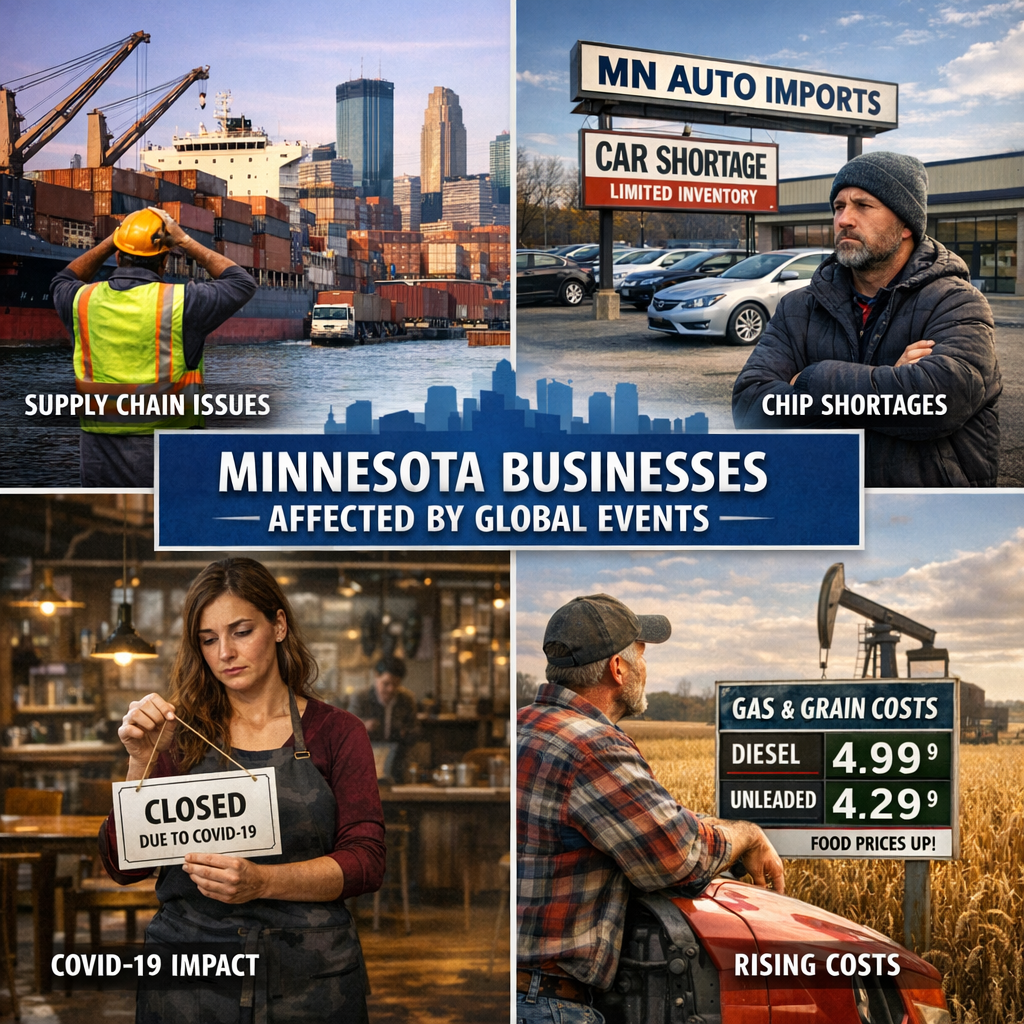
In our interconnected world, global events often have direct and significant effects on local economies, including here in Minnesota. Understanding these impacts can help communities like West St. Paul navigate challenges and seize opportunities arising from international developments.
Trade and Export Dynamics
International trade policies and global market fluctuations play a crucial role in Minnesota’s economy. For instance, in the second quarter of 2025, Minnesota experienced a $1.3 billion decline in exports, largely due to a significant drop in mineral fuel and oil exports to Canada. This decline underscores the state’s sensitivity to changes in the global oil market and highlights the importance of diversified trade relationships.
Immigration Policies and Local Businesses
Federal immigration enforcement actions can have profound effects on local economies. The recent surge of Immigration and Customs Enforcement (ICE) operations in Minnesota has led to reduced foot traffic, staffing challenges, and lost revenue for many businesses, particularly those owned by immigrants. Governor Tim Walz emphasized the impact, stating that fear and uncertainty are adversely affecting small business owners who represent the American Dream.
Cultural Events and Community Engagement
Global events also influence cultural activities within the state. The reimagined International Festival of Minnesota, formerly known as the Festival of Nations, returned to Saint Paul in April 2026 after a seven-year hiatus. Featuring participation from 67 nations and ethnic communities, the festival celebrated Minnesota’s cultural diversity and global connections through cuisine, artisan goods, and performances.
Local Initiatives with Global Perspectives
Organizations like Global Minnesota provide platforms for residents to engage with international issues. Through events and programs, they foster understanding and discussions on global affairs, connecting Minnesotans with world thinkers and cultural experiences.
By staying informed about global events and their local implications, communities like West St. Paul can better adapt to changes and continue to thrive in an ever-evolving global landscape.