

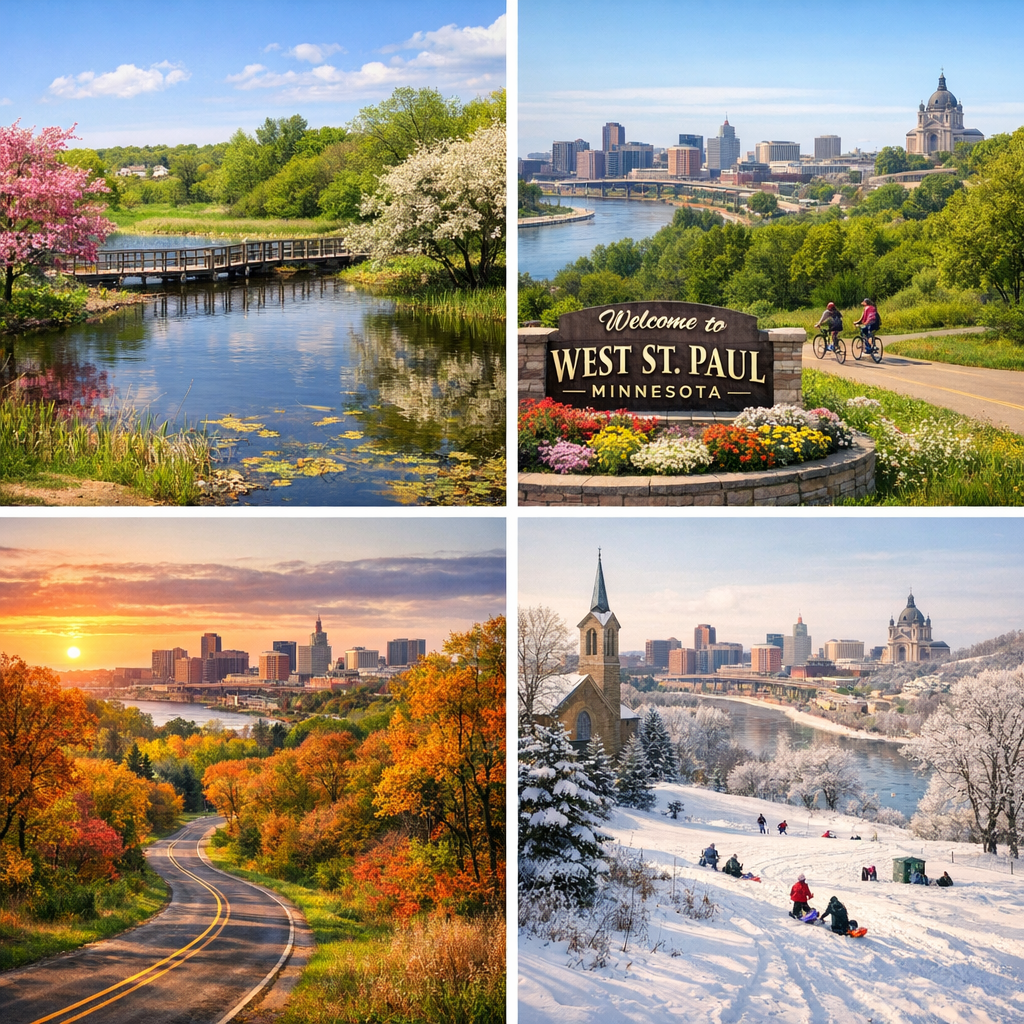
West St. Paul, Minnesota, experiences a diverse climate characterized by warm, wet summers and cold, snowy winters. Throughout the year, temperatures typically range from 9°F to 83°F, with extremes rarely dipping below -10°F or exceeding 91°F. The warm season spans from late May to mid-September, peaking in July with average highs around 82°F and lows near 64°F. Conversely, January stands as the coldest month, averaging highs of 19.9°F and lows of 7.3°F.
Precipitation is fairly evenly distributed throughout the year, with June being the wettest month, averaging 3.82 inches of rainfall over approximately 16 days. Snowfall is common from October through May, with February typically recording the highest accumulation, averaging 4.69 inches over 11 days.
In response to these climatic conditions, West St. Paul has implemented several environmental initiatives aimed at promoting sustainability and enhancing the community’s resilience. The city’s Environmental Committee plays a pivotal role in this endeavor by reviewing matters related to landscaping, greening, sustainability, and natural resources. The committee also supports community engagement, education, and environmental programming, and volunteers at events to improve the city’s natural resources.
Residents are encouraged to participate in these initiatives by adopting environmentally conscious practices. Simple actions such as using reusable bags, properly managing stormwater, and reducing chemical use on lawns and gardens can collectively contribute to a more sustainable community.
By understanding the local climate and actively engaging in environmental initiatives, the residents of West St. Paul can work together to foster a healthier and more sustainable environment for all.