

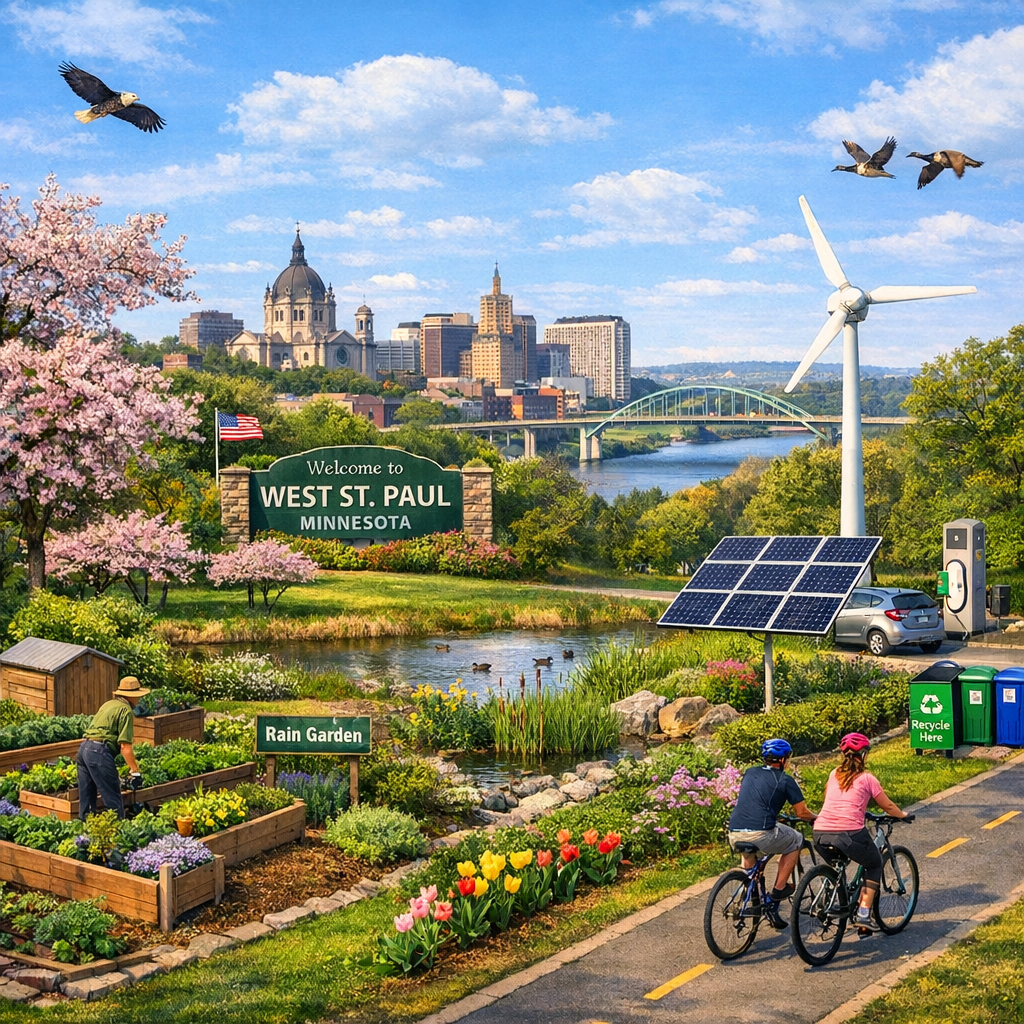
West St. Paul, Minnesota, experiences a diverse range of weather conditions throughout the year, characteristic of a humid continental climate. Residents encounter warm, wet summers and cold, snowy winters, with temperatures fluctuating from lows around 9°F in January to highs near 83°F in July. The city receives an average annual precipitation of approximately 32 inches, with June typically being the wettest month.
Seasonal Weather Patterns
During the summer months, from May to September, West St. Paul enjoys warm temperatures, with July being the warmest month, averaging highs of 82°F and lows of 64°F. Conversely, the winter season, spanning from November to March, brings freezing temperatures, with January being the coldest month, averaging lows of 10°F and highs of 24°F. Snowfall is common during this period, contributing to the city’s winter landscape.
Environmental Initiatives
In response to these climatic conditions and the broader need for environmental stewardship, West St. Paul has implemented several initiatives aimed at promoting sustainability and resilience. The city’s Environmental Committee, a volunteer group of nine residents, plays a pivotal role in reviewing site plans, advising the City Council on environmental concerns, and organizing community events such as Arbor Day celebrations and World Migratory Bird Day.
West St. Paul is an active participant in the GreenStep Cities program, a voluntary challenge that encourages cities to achieve sustainability and quality-of-life goals. Since joining the program, the city has progressed through various steps by implementing best practices in areas like energy efficiency, land use, and transportation. Efforts are ongoing to reach higher steps in the program, reflecting the city’s commitment to continuous environmental improvement.
Additionally, the city offers a composting program at Thompson Park, managed by Dakota County. Residents can bring household organics and food waste to this site for free composting, diverting waste from landfills and producing nutrient-rich soil amendments. This initiative not only reduces waste but also supports local agriculture and gardening efforts.
West St. Paul has also been recognized as a Tree City USA since 2003, highlighting its dedication to urban forestry management. In 2022, the city pledged to become a Bird City, committing to the promotion of habitats for migratory birds and the celebration of World Migratory Bird Day. These designations underscore the city’s efforts to enhance biodiversity and support wildlife conservation.
Community Involvement
Residents are encouraged to participate in these environmental programs and contribute to the city’s sustainability goals. By engaging in activities such as composting, tree planting, and supporting local environmental events, community members play a vital role in fostering a healthier and more resilient West St. Paul.
Understanding the local climate and actively participating in environmental initiatives enables residents to adapt to seasonal changes effectively and contribute to the overall well-being of the community. Through collective efforts, West St. Paul continues to make strides toward a sustainable and environmentally conscious future.